Analysis of Citepa’s ‘Secten 2026’ report
The latestSecten report from Citepa, the organisation responsible for monitoring greenhouse gas emissions in France, has revealed a particularly mixed picture. Whilstgross greenhouse gas emissions have fallen more than expectedfor the years 2024 and 2025, this reduction remainsinsufficient to meet ourlong-termclimate targets.
So why is this reduction – despite being greater than initial forecasts – not currently enough to put France on the path it had set for itself?
A faster, but insufficient, fall in gross emissions
Citepa’s initial estimates predicted a moderate reduction in emissions. The final result turned out to be much more favourable than expected if we look solely at gross emissions:
● – 3 per cent in 2024, compared with the –1.8 per centinitially forecast
● – 2.1 per cent in 2025, compared with the –1.5 per cent initially forecast
Whilst this upward revision may seem like good news, it must be viewed in context. This rate of decline remains clearly below thehistoric 6.8 per cent fall recorded in 2022. To be entirely fair, this peak in the decline was driven bycyclical factors, namely the outbreak of the war in Ukraine and the ensuing energy crisis.
Similarly, recent geopolitical tensions, particularly in the Strait of Hormuz, continue to causetemporary falls in emissionsdue to the global economic slowdown and rising energy costs.
The real challenge now is tomaintain this downward trend in a structural and sustainable manner over time, without relying on short-lived crises or international tensions. To have any hope ofmeeting the climate targets set for 2030, France would need to commit toa reduction of 5 per cent to 6 per cent per year.
Despite the fall, France has exceeded its 2025 carbon budget
Despite the larger-than-expected fall in gross emissions, France hasexceeded its 2025 carbon budget by 17 million tonnes. Having emitted a total of359 million tonnes of CO₂ equivalent, the country remains above the maximum ceiling allocated under the National Low-Carbon Strategy.
An alarming finding: carbon sinks are in decline
The main problem lies inthe weakening of ournatural carbon sinks. Our forests, weakened by global warming and droughts, now capture39 per cent less CO₂ than they did 15 years ago. This decline is a direct result of climate change.
The situation is becoming critical in certain regions: in eastern France, the forests are so damaged that the process has been reversed and they now emit more carbon than they store. At the same time, the ongoing conversion of land to non-natural uses is irreversibly reducing its capacity to sequester CO₂.
Given the uncertainty surrounding industrial carbon capture technologies – which are still in their infancy and energy-intensive – it is becoming imperative to act directly at source by making fundamental changes to our activities and energy sources.
The BioCapsule®: A practical solution for decarbonisation
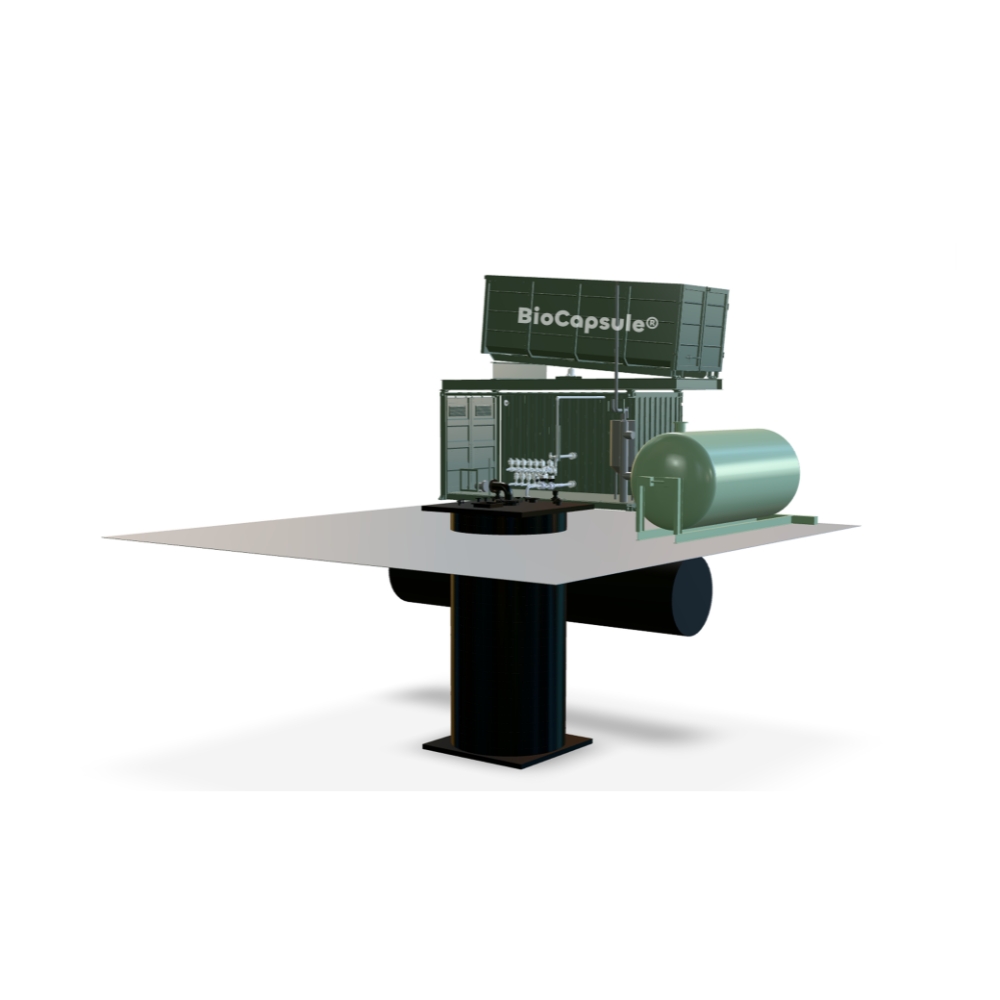
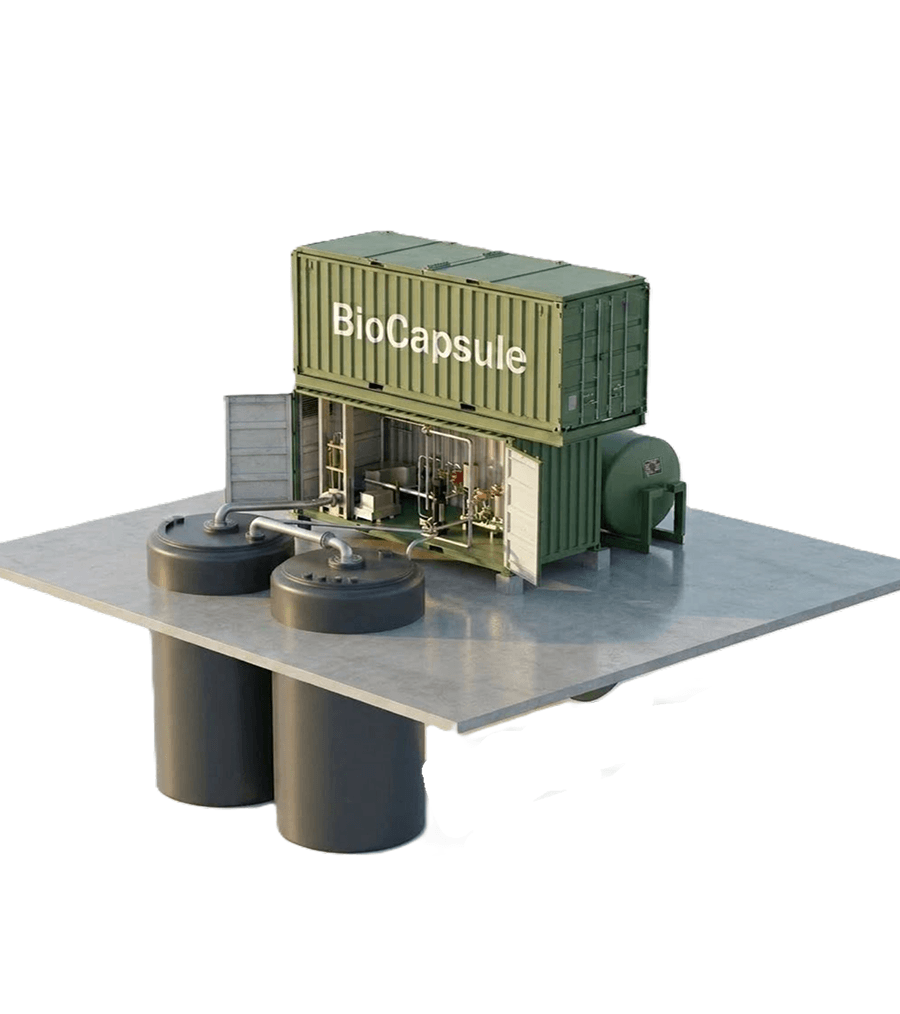
It is precisely within this framework of structural transformation that Arkeale is rolling out itsBioCapsules®. Designed as abespoke micro-energy production unit, the BioCapsule® transforms local organic waste into hyper-local energy at stable costs.
Whereas the current model relies on centralised treatment centres requiring heavy, polluting transport, we offer asolution for direct on-site recovery. Today, some bio-waste travels more than 80 km before being processed. By recycling this waste directly at the point of production, we eliminate these unnecessary journeys. By replacing fossil fuels, each BioCapsule® installedprevents 49 tonnes of CO₂ emissions per year.
● Processing capacity: Between 200 and 800 tonnes of bio-waste recovered per year per unit.
● Energy production: Up to 500 MWh of green energy that can be utilised in three forms depending on your needs: electricity, heat or CNG fuel.
Our approach is100 per cent circular. In addition to energy, the BioCapsule® generateshigh-quality organic fertilisers, thereby ensuring that essential nutrients are returned to the soil. This recycling process directly contributes to soil health and regeneration, a crucial issue given the importance of soil’s role as a natural carbon sink.