The chemical fertiliser crisis
Chemical fertiliser crisis: the agricultural sector hit once again by geopolitical instability
The agricultural sector is once again being hit by global geopolitical tensions. Energy prices are not the only ones suffering from fluctuations caused by a tense international climate: the cost of fertilisers is also rising steadily. France’s heavy reliance on imports of synthetic fertilisers is forcing the authorities to take emergency measures to avert a food crisis.

A chemical fertiliser market under strain
Following a 60 per cent rise in fertiliser prices between 2020 and 2024 due to the war in Ukraine, prices are soaring by a further 70 per cent, this time due to the conflict in Iran. Theblockade of the Strait of Hormuz, through which30 per cent of the world’s fertiliser passes, has had an immediate impact on the price of nitrogen fertilisers, which now standsat €500 per tonne, compared with €380 last winter.
This new crisis highlights the structural fragility of our agricultural model and our dependence on external sources. Today,France relies on imports for 70 per cent of its fertiliser requirements. More than 12 million tonnes of urea are imported each year, mainly from Egypt, Russia and Algeria, to supply French farms.
In light of this, the Minister for Agriculture, Annie Genevard, recently reiterated the absolute necessity of‘resuming fertiliser production in France, to become more self-sufficient’.
Institutional responses to this crisis
In the face of soaring prices, Europe has announced emergency measures to help farmers during this crisis.
On19 May 2026, at theEuropean Commission, the Commissioner for Agriculture, Christophe Hansen, unveiled an action plan providing for a budget of at least200 million euros to support farmers.
The announced plan includes:
⋅ Immediate cash flow support for farmers.
⋅ Greater flexibility in advance payments of CAP subsidies.
⋅ Incentives to reduce dependence on chemical fertilisers in favour of bio-based fertilisers, including a possible relaxation of the Nitrates Directive to encourage the use of digestate from anaerobic digestion.
However, for many agricultural organisations, this support remains inadequate as it does not address the underlying problem: dependence on global markets and fossil fuels.
Achieving self-sufficiency in organic fertiliser thanks to theBioCapsule®
To tackle the problem at its root, it is essential tobring fertiliser production backto the heart of our local communities.
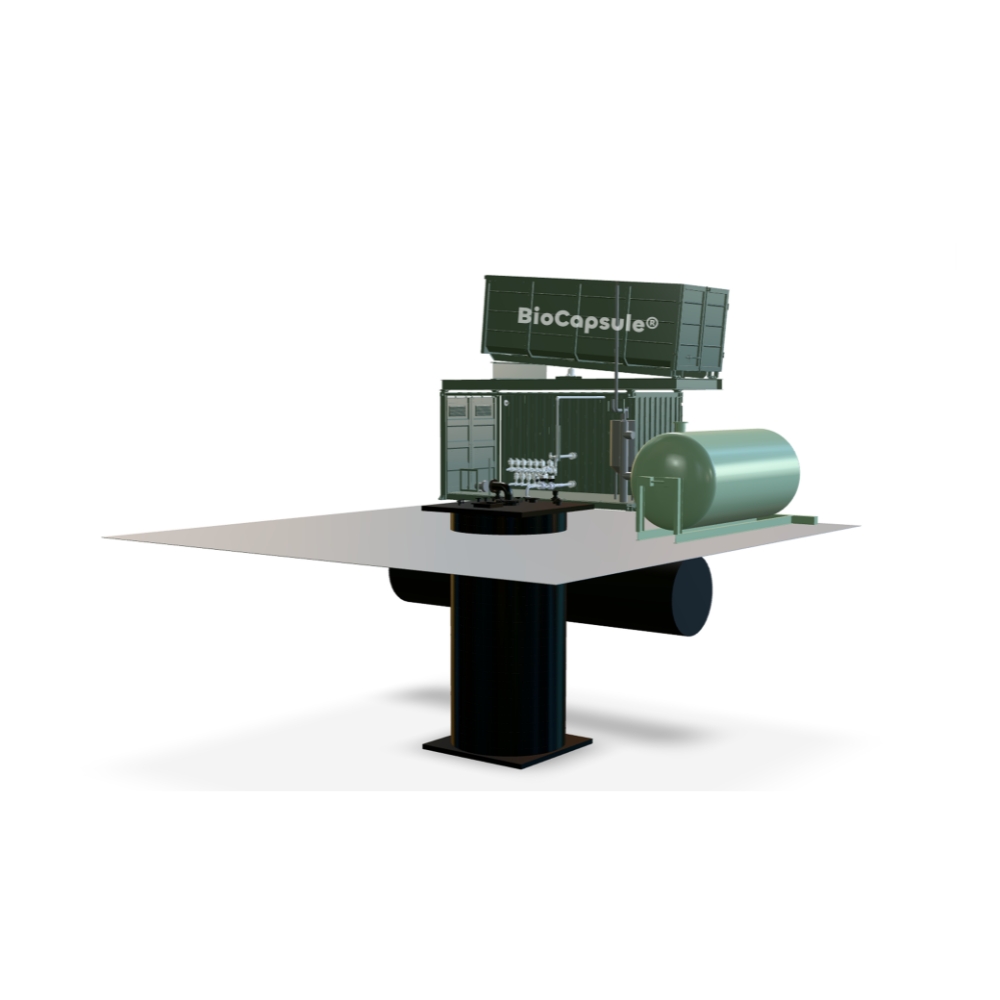
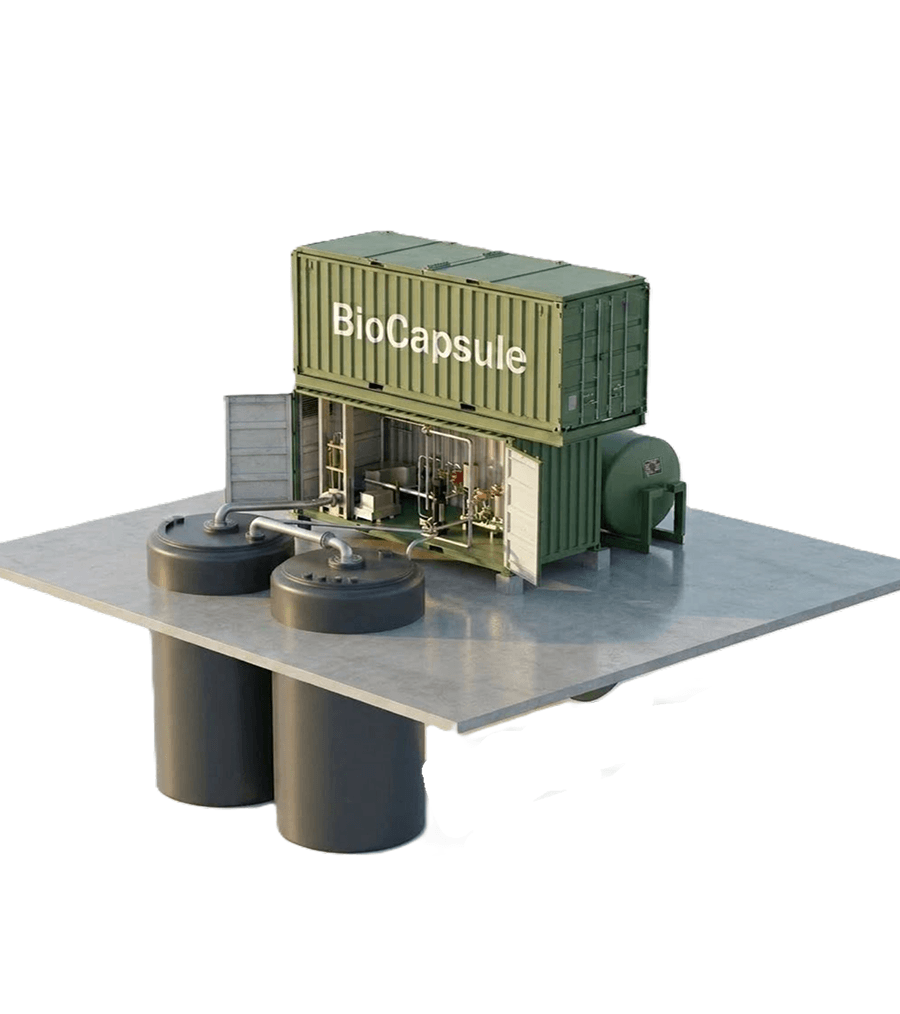
With theBioCapsule®, you can secure your farm’s production and become self-sufficient not only in fertiliser but also in energy.
The BioCapsule® is amicro-anaerobic digestion plantthat converts your organic waste into energy and high-performance fertiliser.The first of these unitshas already been installed at an organic market gardener’s farm. The unit enables him toreduce his fertiliser costs by 25 per cent, whilst achieving40 per cent energy self-sufficiency.
Digestates: high-quality fertilisers from theBioCapsule®
The anaerobic digestion process produces gas, but also an organic residue known asdigestate. This product consists of two fractions – a solid fraction and a liquid fraction – each with different properties and different ways of being utilised.
Until now, the use ofliquid digestatefrom anaerobic digestionin agriculture has faced obstacles due to thetendency of ammoniacal nitrogen to volatilise.
Thanks to aninnovative filtration and biological acidification process, developed in collaboration withINRAE, Arkeale is removing the barriers to the use of liquid digestate. This innovation enables the optimal application of liquid digestate from the BioCapsule® and makesthe fertiliser fully compatible with fertigation.