The bioeconomy: what are the developments and challenges facing the sector?
In the age of artificial intelligence, another technological revolution – one that is quieter but just as powerful – is constantly evolving:the bioeconomy. Yet this promising sector does not develop on its own, particularly when it comes to turning scientific research into industrial realities.
What is the bioeconomy?
Thebioeconomyencompassesall economic activities linked to the production and processing of renewable biological resources. Its main aim is toreplace fossil carbon and oil with resources derived from living organismsto produce energy, new materials or agri-food products, amongst other things.
The bioeconomy encompasses a wide range of activities such as:
• The manufacture of bioplastics
• The production of bio-based materials for the construction sector or industry
• The development of biofuels
• The production of biogas and energy from organic matter
What are the benefits of investing in this sector?
Contrary to what one might think, the value of the bioeconomy extends far beyond the climate context alone. Whilst replacing fossil resources is a fundamental part of decarbonisation, investing in this sector also addresses a strategic and geopolitical imperative. GivenEurope’s dependence on energy and fertiliser imports, making the most of the biological resources available within our territories becomes a means of achieving self-sufficiency and resilience.
Furthermore, the bioeconomyrevitalises the local economy. Because it relies on locally available raw materials, it promotes direct processing on site. This model generates jobs that cannot be relocated, often situated at the heart of our rural areas.
In France,the sector currently employs1.9 million people, withan estimated economic value of300 billion euros. According to Christophe Rupp-Dahlem, chair of FranceAgriMer’s bioeconomy commission, this economic impact could increase tenfold by 2050. (Source:FranceAgriMer)
The challenges facing the bioeconomy
To develop in a clean and sustainable manner, the sector must now address three major challenges:
1. Respecting nature’s timing:The sector’s pace must be aligned with the renewal cycles of ecosystems, which requires the responsible and judicious use of biological resources.
2. Moving from research to industry: To date, European policies and funding have provided massive support for research and innovation. The real challenge now lies in scaling up to an industrial level, against a backdrop of declining public funding and fierce international competition, particularly with China. France and Europe have no shortage of ideas, but the challenge will be to turn these concepts into factories and real jobs.
3. Ensuring full circularity:To avoid replicating the linear model of the traditional economy – ‘extract, produce, consume, dispose’ – bioeconomy products must be designed to last, be repaired, reused and recycled.
How can we tackle these challenges?
To avoid overexploiting biological resources, stakeholders in the bioeconomy will needto accurately assess the regenerative capacity of resources, in order to ensure that extraction remains environmentally sustainable.
Furthermore, bioeconomy activities must be as local as possible. The aim is to avoid importing raw materials for consumption in Europe, only to then send the waste back outside our borders. Prioritising short supply chains ensures rigorous traceability, limits the carbon footprint associated with the transport of organic materials, and guarantees that the benefits of this circularity flow directly back to the region of production.
The BioCapsule®: a local and sustainable bioeconomy project
It is precisely within this framework of local focus and respect for natural resources thatArkeale operates.
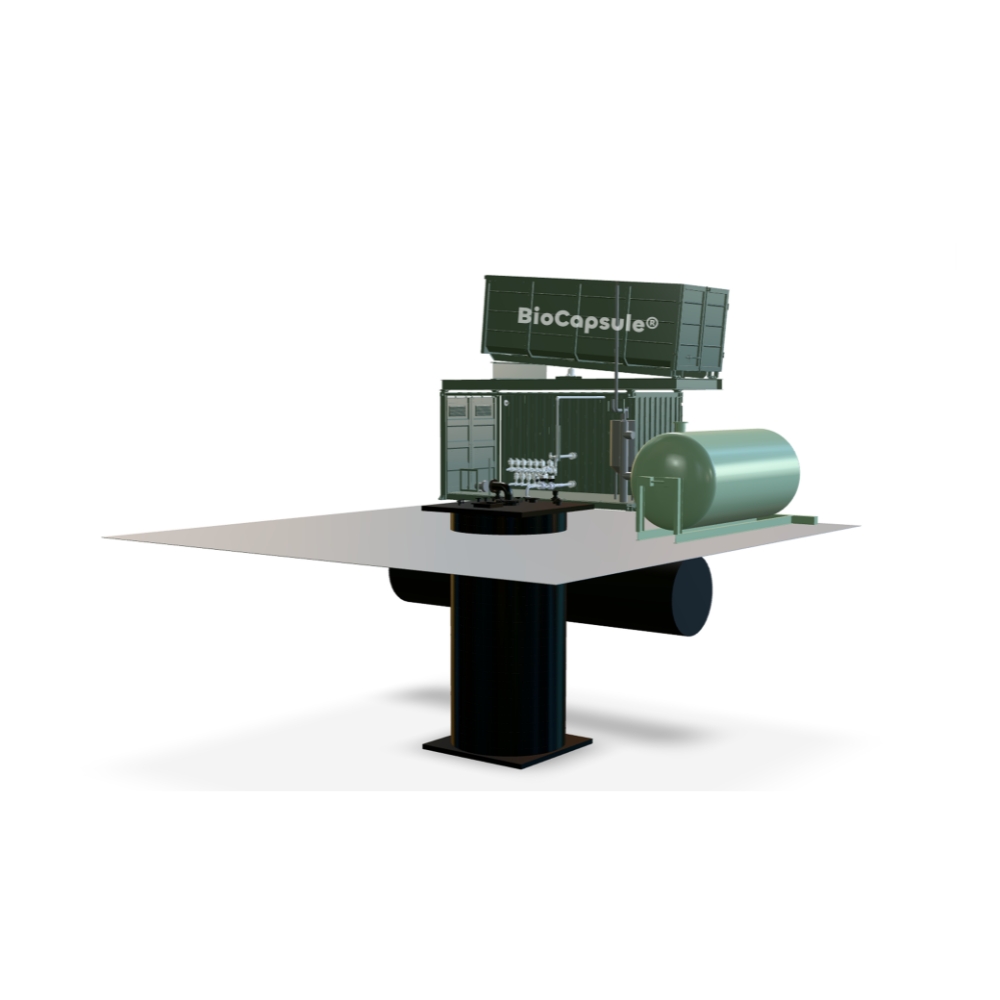
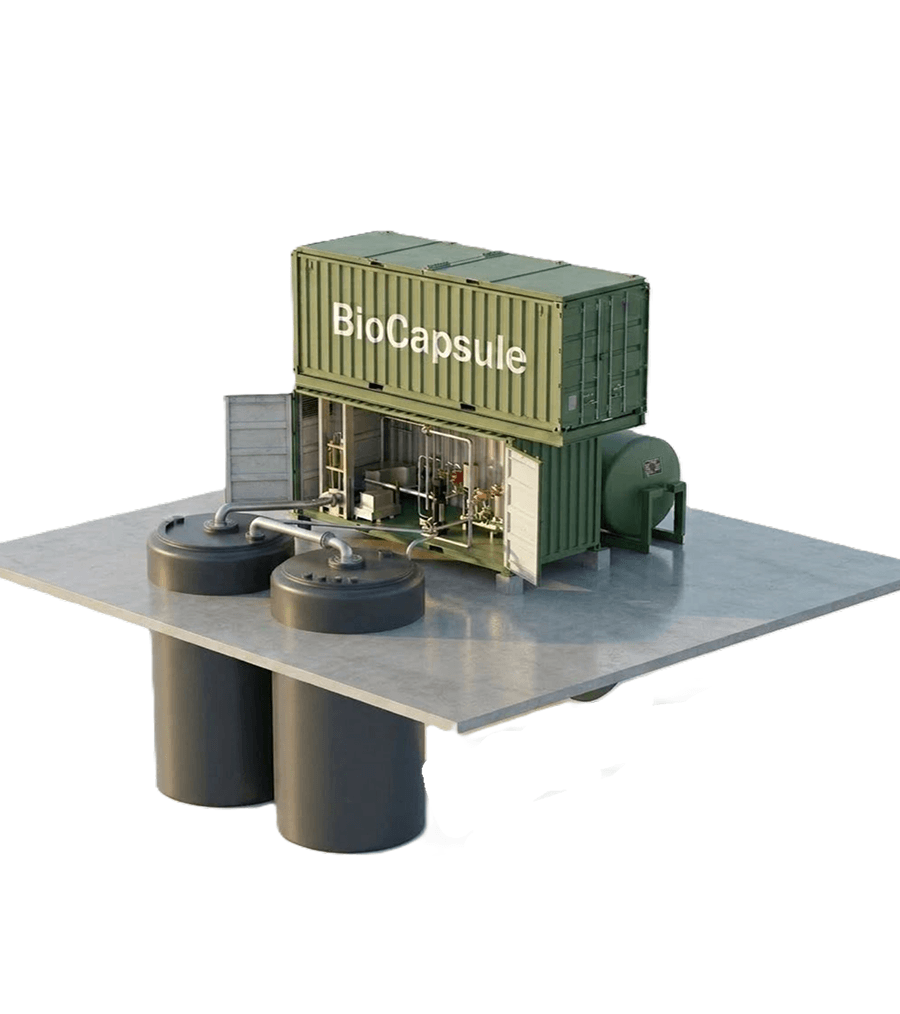
With theBioCapsule®, Arkeale offers arenewable energy production unit that utilises bio-waste. Thanks to its compact design and small size, it enables local businesses to installtheir ownmicro-anaerobic digestionunits to recover energy from their bio-waste directly on site, producing green energy for self-consumption.
Hyper-locality lies at the heart of this approach. By using onlyorganic waste produced on-siteor by nearby businesses, the BioCapsule® avoids unnecessary transport of materials and keeps energy within the local area.
Circularity, meanwhile, is ensured by the recovery ofthe digestateproducedby the anaerobic digestion process. Thisorganic fertiliser enables nutrients to be returned to the soil in a sustainable way, thereby preserving the health of local soils, which in turn will be able to produce the food of the future.
By relying onlow-tech, decentralised technology, Arkeale is making a tangible contribution to the roll-out of a circular bioeconomy firmly rooted in local communities.